
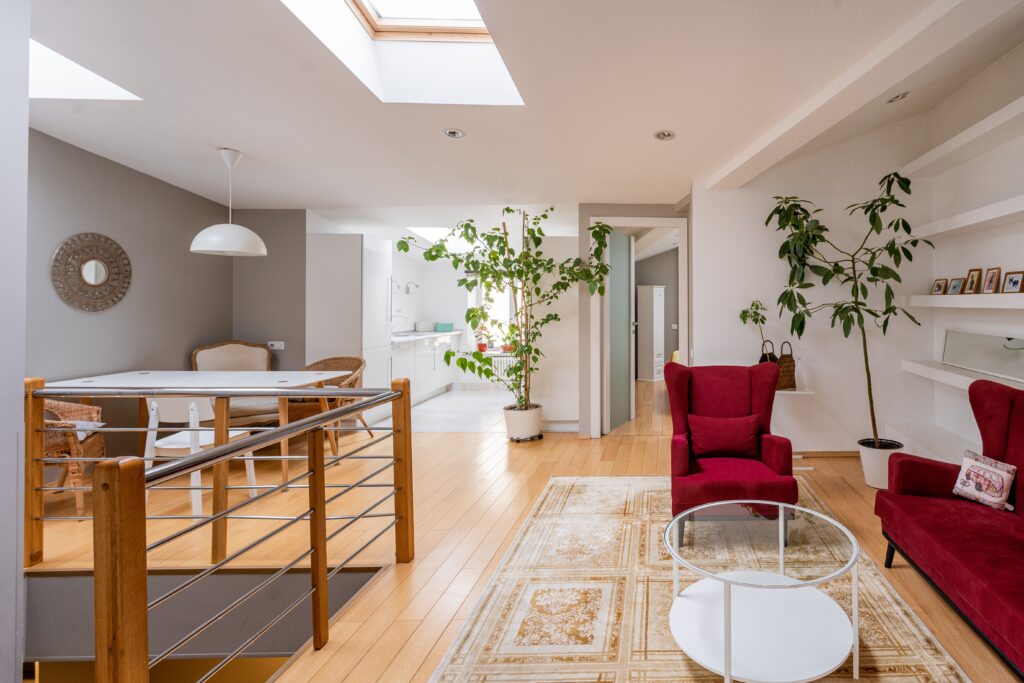
Interior Design Montclair: Creating a Home That Feels Like You
Nobody notices good design on a Tuesday. That’s actually the whole point of it. You don’t stop mid-morning to admire a coat closet that’s exactly where you need it, or a kitchen counter with just enough space to actually prep dinner without playing furniture Tetris. Good design disappears into the rhythm of an ordinary day – which is exactly why bad design is so easy to spot: it announces itself constantly, in a hundred small frictions nobody signed up for. Real New Jersey Residential Interior Design isn’t primarily about how a home looks in a single photograph. It’s about how a home behaves on a completely unremarkable Tuesday, for years.
The Everyday Cost of a Home That Doesn’t Fit You
Every home teaches its occupants a hundred small workarounds over time – the drawer that sticks, the hallway that’s just slightly too narrow for two people to pass comfortably, the reading chair nobody ever actually sits in because it’s angled toward a wall instead of a window. None of these individually ruins a day. Together, accumulated over months and years, they quietly define how much a home is actually working for the people living in it. Thoughtful home interior design NJ starts by noticing these frictions, not layering fresh paint over them and hoping they disappear.
Space Planning That Starts With How You Actually Move
Real home space planning NJ begins with laying out a space using precise, scaled furniture plans so everything fits the way it should before a single piece is ordered – which sounds like a purely practical step until you consider what it actually prevents: a sofa that blocks the natural path to the kitchen, a dining table too large for anyone to comfortably pull out a chair. Planning digitally, before commitment, is what turns a beautiful room into a room that also works.
Homes That Change Shape as Families Do
A family home design New Jersey households actually need has to account for something static photography can’t capture: life keeps happening inside it. Kids grow, routines shift, a home office becomes necessary, guests arrive more or less often than anyone planned for. Consultation and discovery – genuinely understanding a household’s lifestyle, not just its square footage – is what allows a design to anticipate some of that change instead of becoming outdated the moment circumstances shift even slightly.
The Rooms Nobody Photographs Matter Just as Much
Interior design conversations tend to orbit around statement rooms – the kitchen, the primary suite, the room guests actually see. But residential interiors New Jersey homeowners genuinely live inside include the mudroom, the hallway, the awkward nook by the stairs – the transitional spaces that don’t photograph well but absorb an enormous share of daily friction if they’re ignored. A curated, intentional approach to materials and finishes chosen to work together as a whole, rather than handled piecemeal, tends to extend real thoughtfulness into these overlooked spaces too, not just the ones destined for a portfolio.
Custom Solutions for the Rooms That Never Quite Worked
Every older or unusually shaped home has at least one room that off-the-shelf furniture simply refuses to cooperate with – a bay window nobody’s ever furnished well, a slanted ceiling that swallows standard bookshelves. Custom furniture, built for a space’s specific dimensions and materials, solves exactly this kind of long-standing daily annoyance, the one so familiar a household has stopped even mentioning it out loud.
Why Homeowners Deserve to Be the Starting Point, Not the Afterthought
Genuinely effective homeowner interior design NJ projects treat the person actually living in the space as the source of the brief, not a client to be managed around someone else’s aesthetic preference. Designs built around how you actually live, rather than a generic look pulled from wherever is trending, are what make a home feel considered rather than performed-a distinction most people can feel within seconds of walking in, even if they can’t name it.
The Real Payoff Is Measured in Ordinary Days, Not Reveal Photos
The genuine return on thoughtful interior design doesn’t show up in a single dramatic before-and-after. It shows up gradually, in the accumulation of small frictions that simply stop happening – the coat that finally has somewhere to go, the reading chair someone actually sits in, the kitchen that works for the way this specific family actually cooks. That’s a harder thing to photograph than a finished room. It’s a considerably better thing to live inside.
The best interior design in New Jersey doesn’t announce itself with a single stunning photograph – it shows up in the ordinary Tuesdays that follow, in the small daily frictions that quietly stop happening once a home has actually been designed around the people living in it. Thoughtful space planning, custom solutions for rooms that never worked, genuine attention to transitional spaces, and a design process that starts with how a household actually lives are what define real New Jersey Residential Interior Design. That’s the standard Eva Studios brings to every home it works on. If your home has a few of those small, familiar frictions worth finally addressing, start your design journey with Eva Studios.
Frequently Asked Questions
1. How does interior design actually improve daily life, beyond aesthetics?
By addressing the small daily frictions a poorly planned home creates – awkward traffic flow, furniture that doesn’t fit real routines, transitional spaces left unconsidered – so the home actually supports how people live in it.
2. What is the first step in designing for everyday use, and not just looks?
A lifestyle-centered, daily habits-focused conversation with your clients; nothing about aesthetics. This is to enable the designer to know how that room is truly used and to ensure there is nothing there they won’t use in the design, at least!
3. Why is furniture placement important for daily life, beyond placement considerations for looks?
So the homeowner won’t be bothered by functional, daily annoyances and disruptions such as narrow doorways between rooms that are not intended to have doors and furniture too large for how the space is actually used.
4. Do “functional” transitional spaces, such as mudrooms and hallways, have design worthy of study?
Functional transitional areas may have lots of foot traffic or absorb significant household “friction,” but never make their way into a published “photo story”; however, they should and are worth designing carefully.
5. Is customized furniture the answer for the awkwardly designed room that has never functioned as desired?
Standard and manufactured furniture that is modified will never serve that awkwardly placed room properly and be perfectly suited, so, usually, the room in question is made functional with specially sized custom furniture.
6. Eva Studios’ secret to updating a house for a growing or transitioning family?
A process that entails a thorough understanding and real discovery of how a household lives daily and in what direction they expect that to grow, allowing furniture and design solutions to change gracefully with lifestyle circumstances, not become outdated due to stagnant and static design.
7. How long is a typical residential interior design project completed in the New Jersey area?
Typically, between 6-12 weeks for residential interior design projects; full house renovations take a bit longer, though, due to a larger scope.
8. What parts of the New Jersey vicinity is Eva Studios available in?
Our design team serves clients within: Bergen County, Hudson County, Essex County, Morris County, and Middlesex County in NJ, along with other surrounding counties.
9. Does Eva Studios have a “style signature,” or does its approach custom-tailor to its clientele?
Eva Studios’ strengths in modern, contemporary, Transitional, classic, and Luxury residential design styles allow us to seamlessly adapt to every single one of our clients’ individual tastes and, of course, preferences in lifestyle.
10. How is a design’s success actually measured after the project is finished?
Less by a single dramatic reveal and more by whether daily friction points have genuinely disappeared, which shows up gradually in how the home functions over time.